

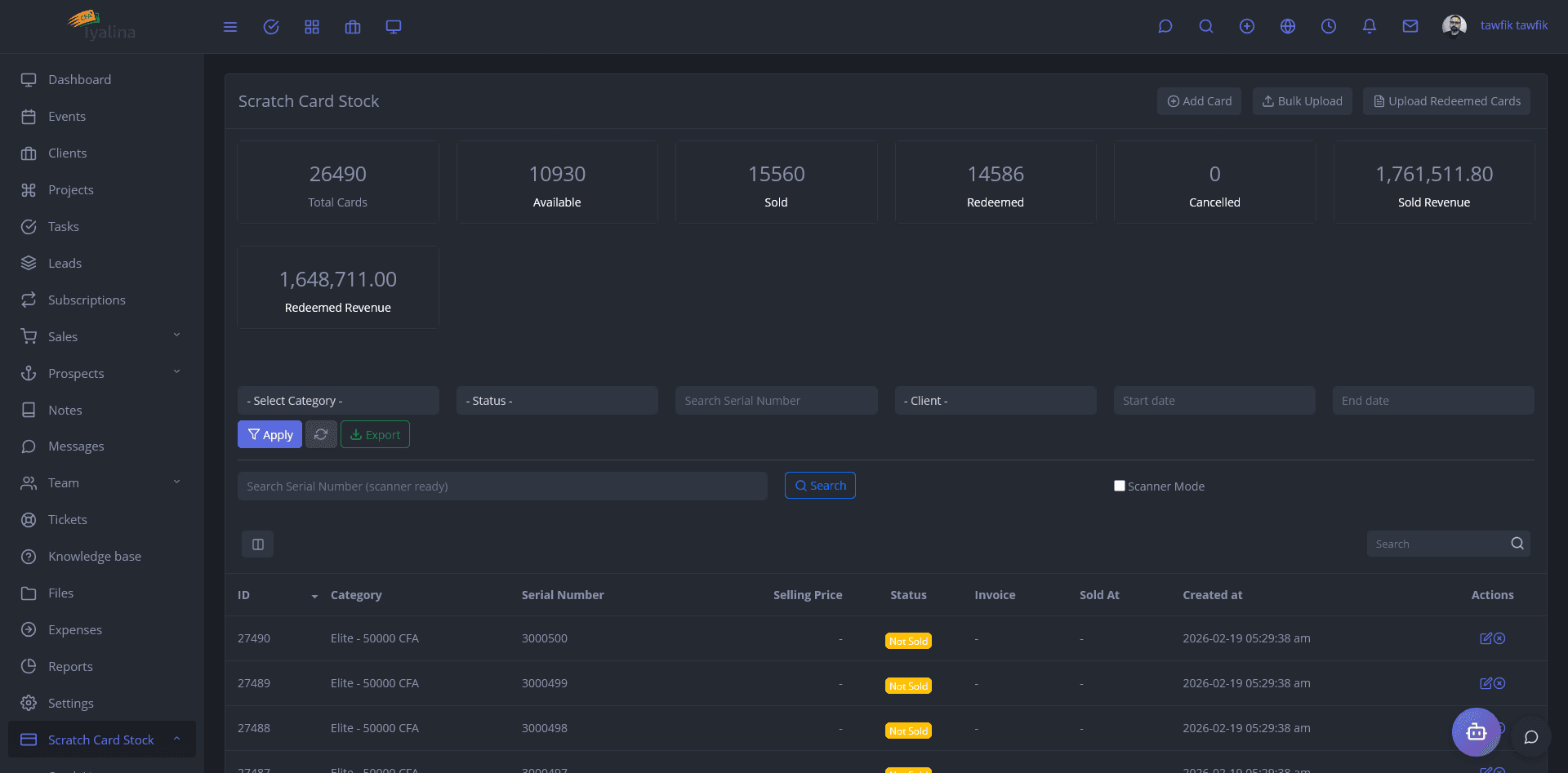
The real challenge is operational control
Scratch-card money transfer platforms are not only transaction screens. The business needs to control card stock, transfer records, client balances, invoices, team work, and reporting from one reliable system.
For this type of fintech platform, I focus on the operational chain first:
- Card stock creation and assignment
- Transfer request tracking
- Client portal access
- Invoice and payment visibility
- Sales and account workflows
- Reporting for finance and operations
- Role-based access for staff and managers
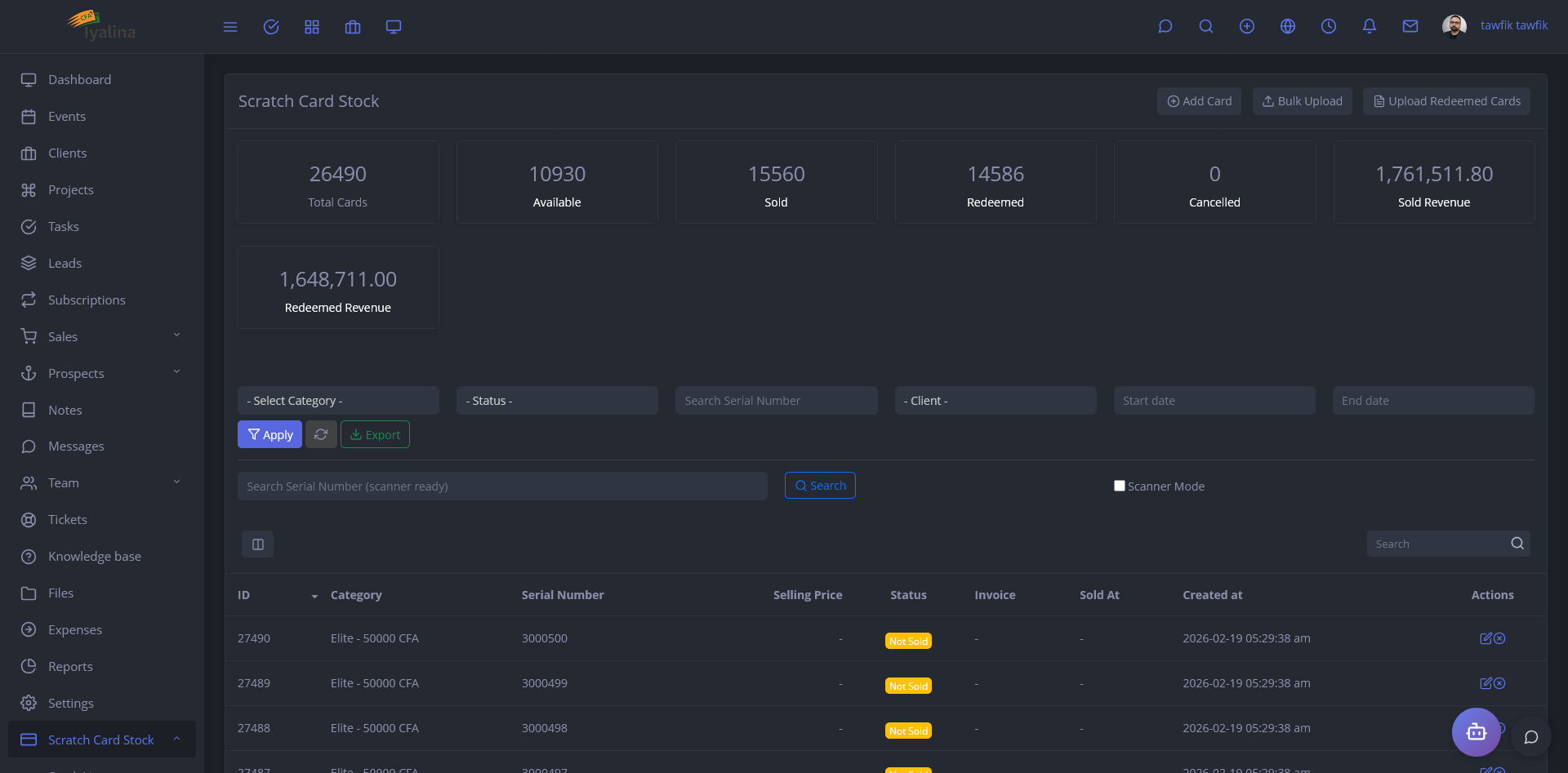
Card stock must be traceable
Scratch cards need strong inventory rules. A card should have a clear lifecycle: created, assigned, active, used, voided, or reviewed. That makes it possible to audit stock movement and reduce operational mistakes.
The backend should answer questions like:
- Which cards are available?
- Which cards were assigned to a branch, agent, or client?
- Which cards are linked to completed transactions?
- Which card batches need review?
Finance screens need direct answers
Money-transfer platforms also need finance visibility. Teams should quickly see invoice status, unpaid balances, partially paid records, and year-to-year income or expense movement.
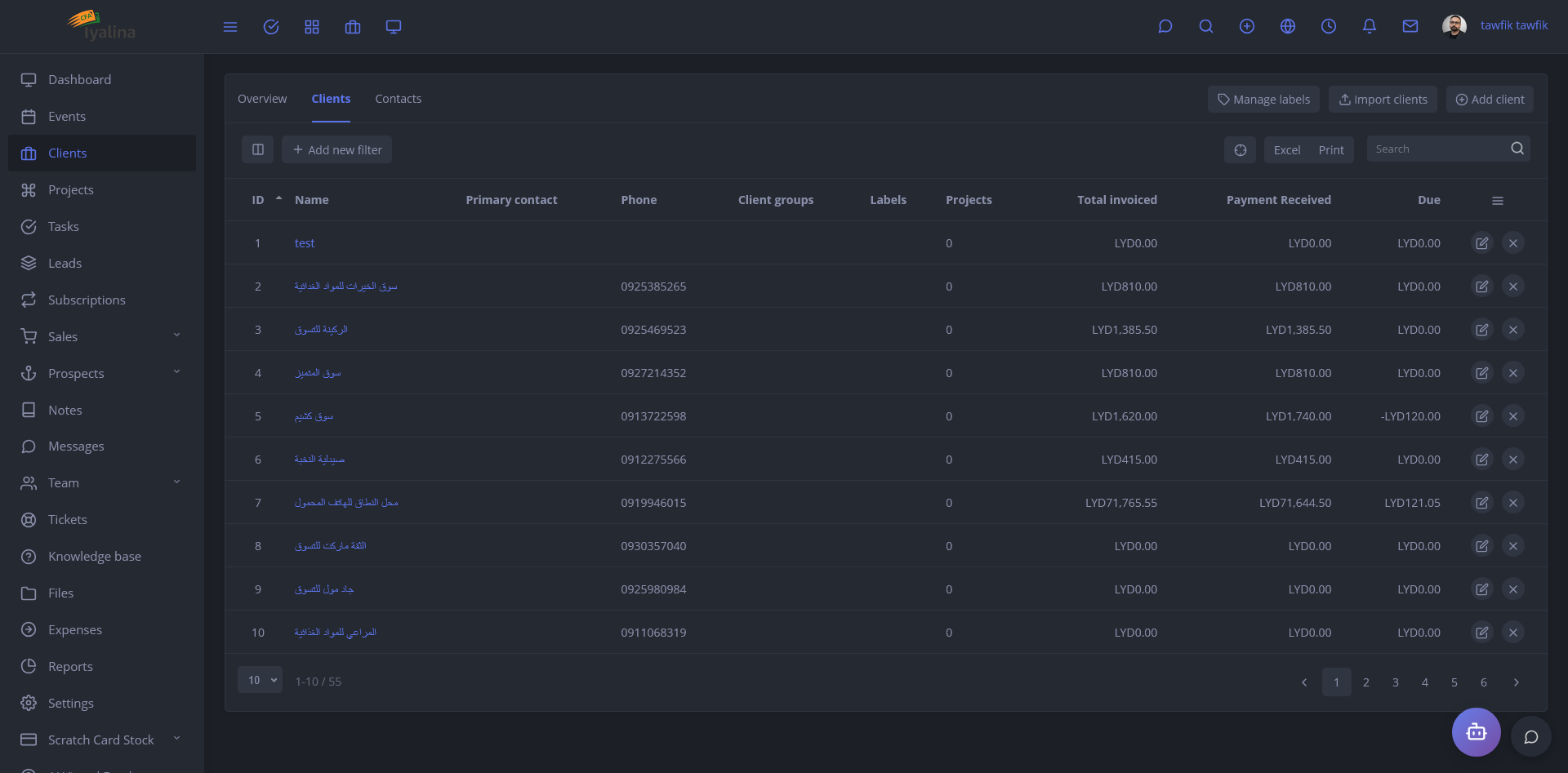
Operations teams need a live workspace
Beyond finance, the platform needs daily workflow screens for projects, reminders, team activity, tickets, leads, SMS logs, and client communication. These screens help operators see what needs attention without digging through disconnected tools.
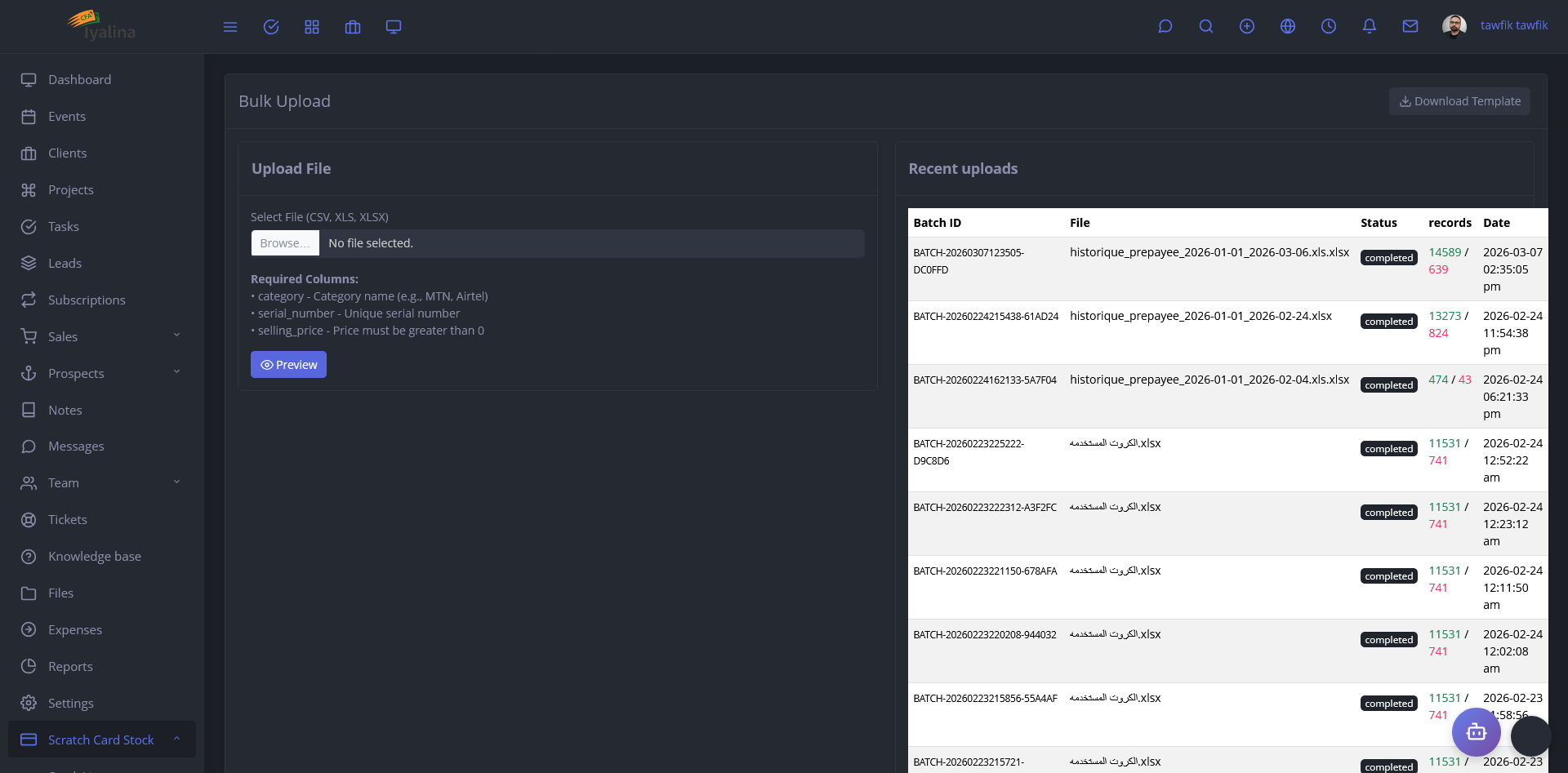
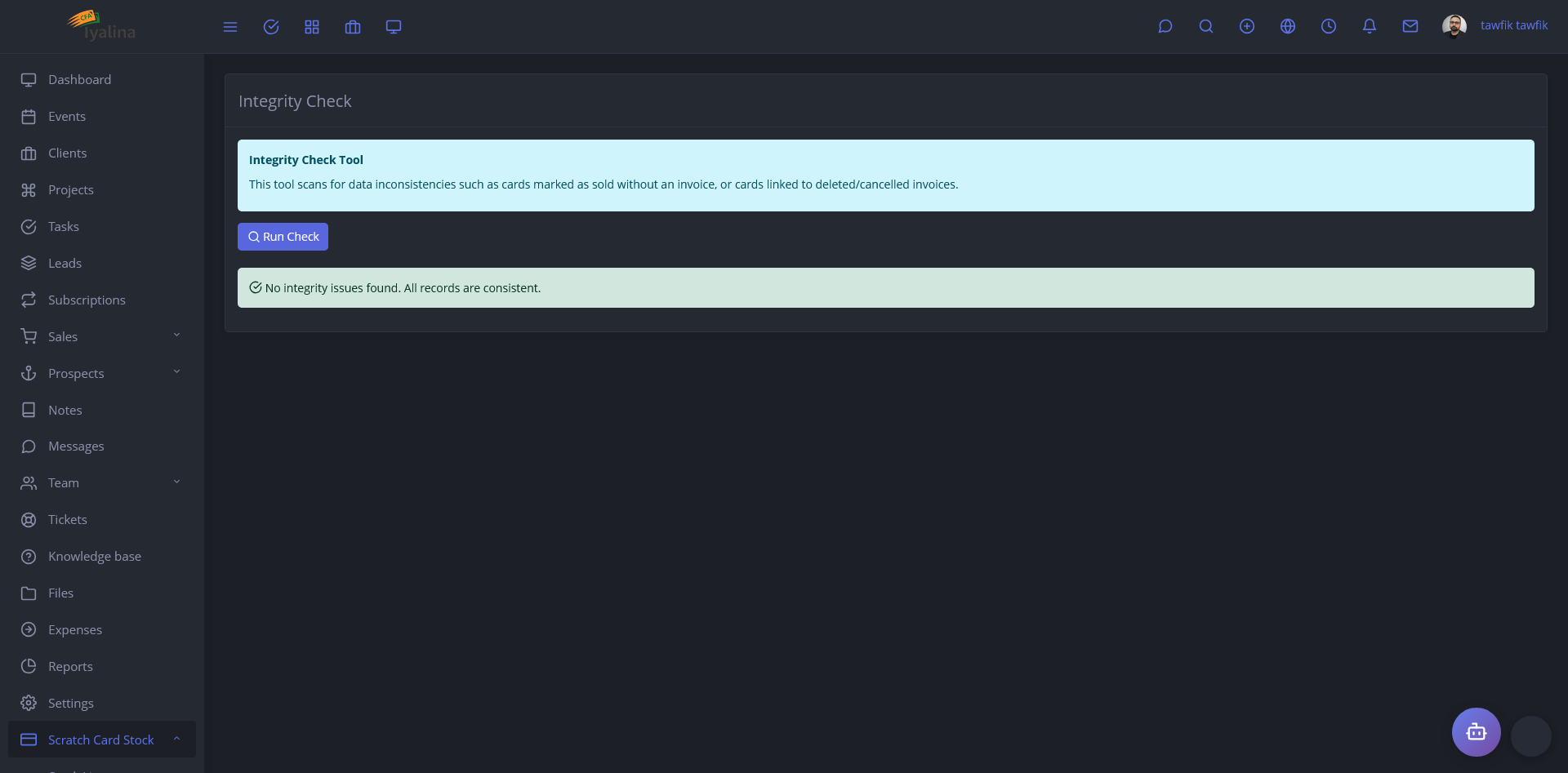
Integrity checks protect the workflow
I also include consistency checks for sensitive workflows. For example, the system can scan for cards marked as sold without invoices, cards linked to deleted or cancelled invoices, or other states that should not happen in a clean transaction flow.
What makes the system reliable
For fintech work, reliability comes from clear data boundaries, permission checks, audit-friendly records, and predictable reporting. The goal is to let the business handle transfers and card stock with confidence while keeping finance, sales, and client service connected.