

Why POS systems need a strong backend first
Most POS projects fail when the database is treated as an afterthought. The screen may look simple, but the system has to handle sales, returns, purchases, stock movement, due lists, parties, user roles, and reporting without losing consistency.
For Laravel POS and inventory systems, I start with the operational model before I start the UI:
- What creates stock?
- What reduces stock?
- What can be edited after posting?
- Who can see cost, profit, and reports?
- Which actions need audit history?
That structure decides the database, permissions, and API contracts.
Core modules I usually separate
I keep the system modular so future changes do not break daily work:
- Products and categories
- Parties, suppliers, and customers
- Purchases and purchase returns
- Sales and POS sales
- Stock ledger and stock adjustment
- Payments, due lists, and collections
- Profit and loss reporting
- User roles and permissions
This makes the system easier to maintain because each workflow has a clear boundary.
Reporting depends on clean transactions
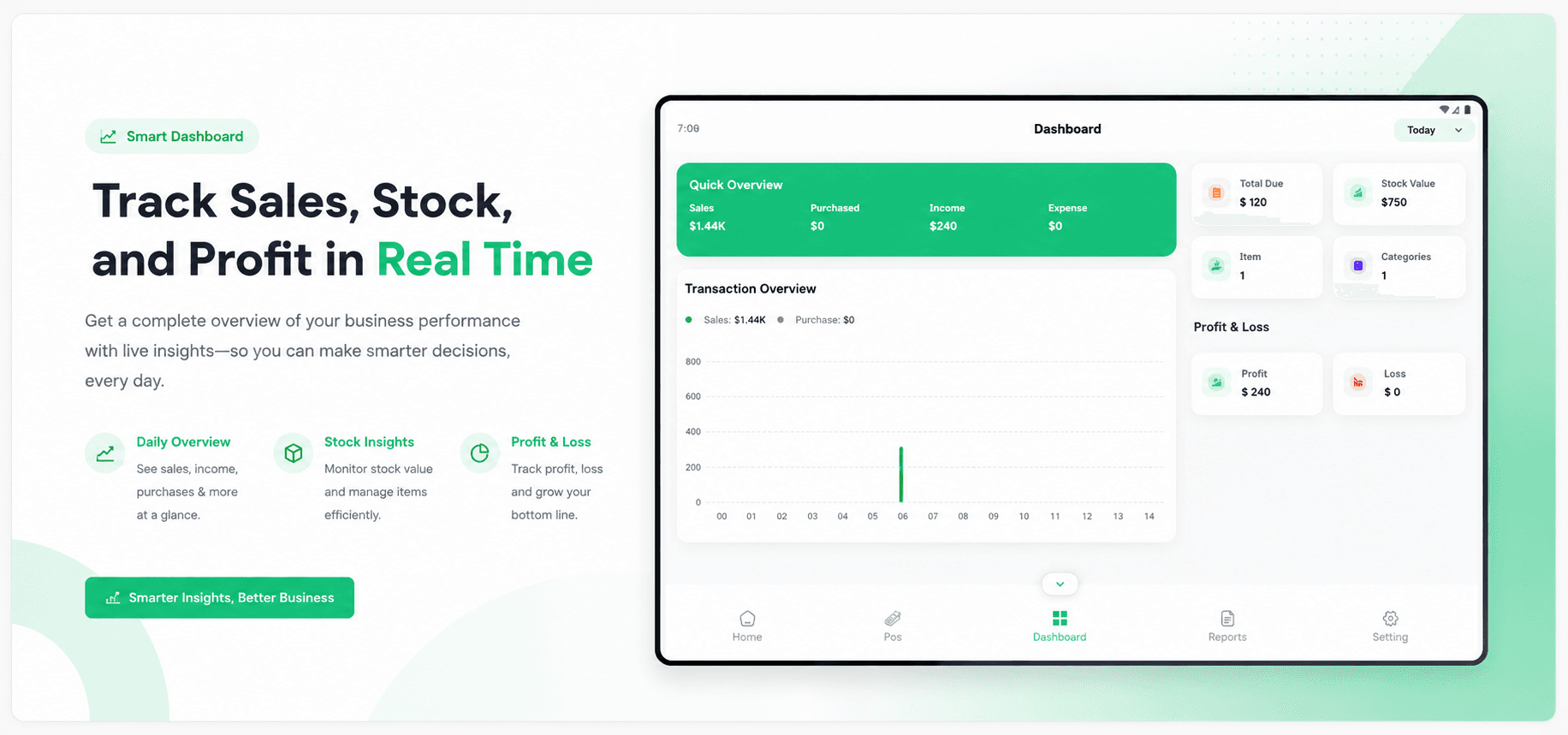
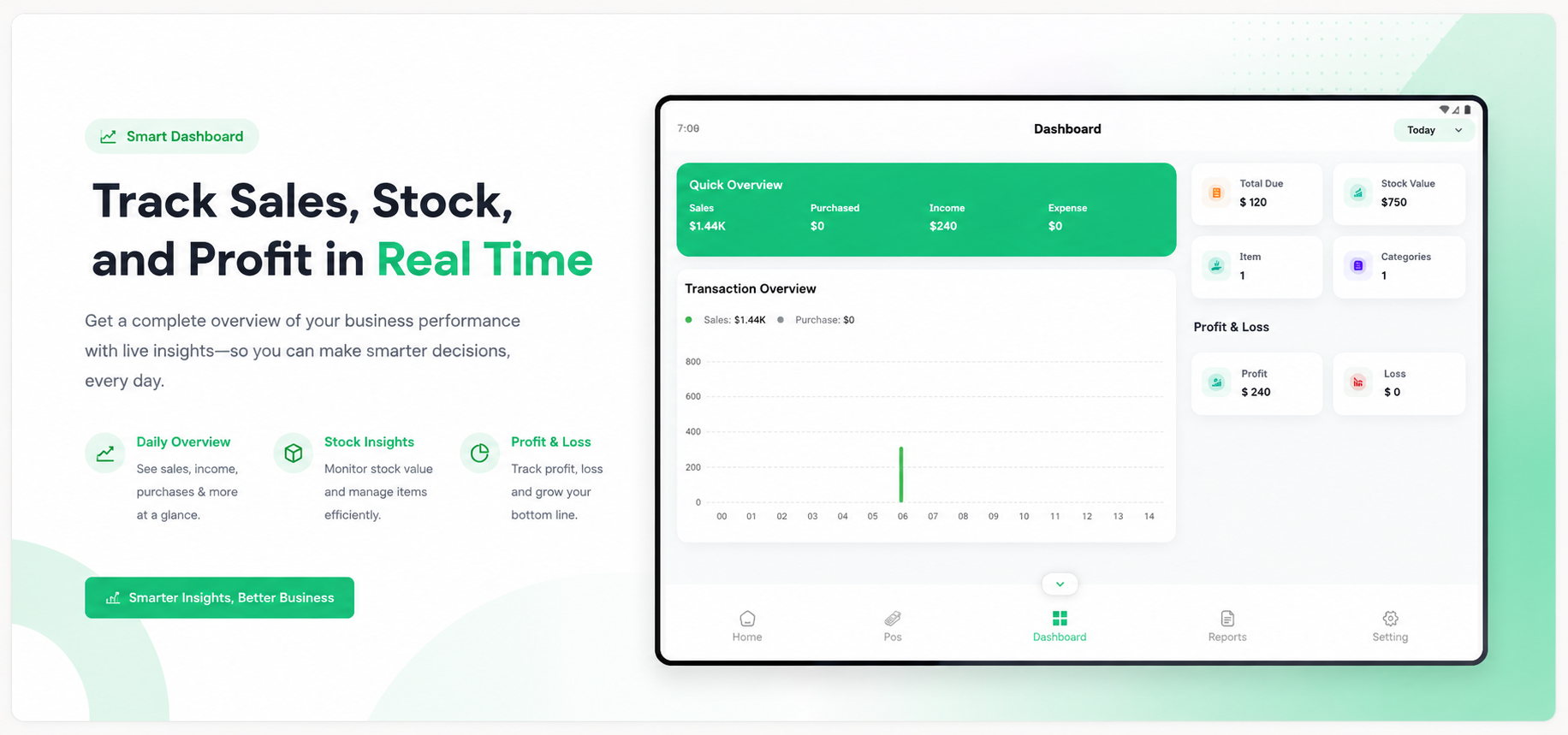
Dashboards are only useful when the underlying transactions are clean. I avoid calculating business numbers directly from UI state. Instead, the application records each sale, purchase, payment, and stock movement in a way that can be rebuilt and audited.
That gives business owners reliable answers to questions like:
- How much stock do I have today?
- Which customers still owe money?
- Which products move fastest?
- Where did profit change this week?
The practical goal
The goal is not just to build a POS screen. The goal is to build a system that staff can use every day without workarounds, and that owners can trust when they check stock, revenue, and profit.